Gen AI for Textile & Apparel Industry
Design Faster, Produce Smarter, Deliver Better. Speed up your design-to-production cycle by letting AI handle the grueling prep work, from tedious merchandising data entry to catching subtle fabric flaws directly on the line.
Trusted by 50+ Global Apparel Exporters


8+ Ways Gen AI Transforms Textile & Apparel
From merchandising automation to AI-powered design, explore our comprehensive suite of textile industry solutions.
Merchandising Workflow Automation
Merchandisers spend hours staring at mismatched tech packs, messy BOMs, and scattered buyer emails, trying to copy-paste it all into the ERP. It’s a mind-numbing bottleneck before production even starts.
Deep DiveBuyer Communication Assistant
Buyers ask for sampling updates constantly, and if you respond with the wrong tone—or misquote a compliance rule—you risk the relationship. Keeping 50 different buyers happy at high volume is exhausting.
Deep DiveVoice-based QC Assistant
QC workers on the floor have to put down the fabric, take off their gloves, and manually type every defect into a tablet. It breaks their concentration and slows the entire line down to a crawl.
Deep DiveFabric Defect Detection (4-Point System)
Staring at miles of fabric rolling by guarantees human error. Inspectors get tired, miss a tiny shade variation, and suddenly a whole batch gets rejected downstream, throwing thousands of dollars in the trash.
Deep DiveTrend & Color Intelligence
Designers get stuck scrolling through competitor social feeds and pulling last year’s order spreadsheets just to guess what colors will hit next season. It’s slow, tedious, and relies entirely on gut feeling.
Deep DiveDesign Inspiration Engine
Every designer hits a wall. But when a major buyer needs 15 fresh mood board concepts by Tuesday morning, 'creative block' isn't an acceptable excuse.
Deep DiveMerchandising Workflow Automation
The Problem
Merchandisers spend hours staring at mismatched tech packs, messy BOMs, and scattered buyer emails, trying to copy-paste it all into the ERP. It’s a mind-numbing bottleneck before production even starts.
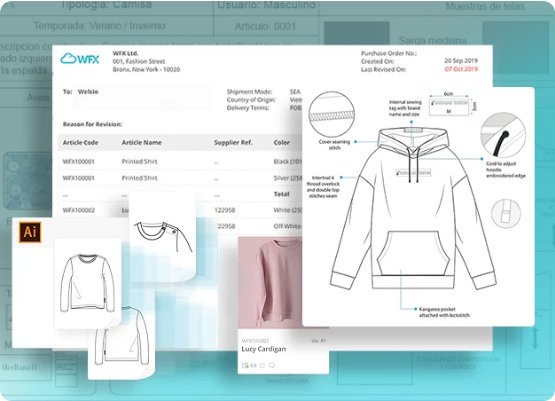
Strips the manual data entry out of the process. The system reads your messy tech packs, instantly typing out the exact fabric type, GSM, and trims straight into your ERP fields. All digitized tech packs and buyer approvals are then securely archived into our CannyECM (Enterprise Content Management) platform for instant, central retrieval across your entire supply chain.
Key Capabilities
- Tech pack data extraction
- BOM auto-population
- Style sheet parsing
- Buyer email analysis
- ERP/PLM field mapping
Buyer Communication Assistant
The Problem
Buyers ask for sampling updates constantly, and if you respond with the wrong tone—or misquote a compliance rule—you risk the relationship. Keeping 50 different buyers happy at high volume is exhausting.
Write back instantly in the exact tone each specific buyer expects. It checks your internal systems (e.g., 'Sampling finishes in exactly 10 days') and drafts a perfectly structured reply so you just hit send.

Key Capabilities
- Tone-matched response drafting
- Historical interaction analysis
- Real-time status integration
- Compliance rule checking
- Multi-buyer style adaptation
Voice-based QC Assistant
The Problem
QC workers on the floor have to put down the fabric, take off their gloves, and manually type every defect into a tablet. It breaks their concentration and slows the entire line down to a crawl.
Let your inspectors keep their eyes on the fabric. They just speak out loud: 'Three-inch oil stain on the weft, zone B', and the system logs it straight into the ERP with the correct severity score.
Key Capabilities
- Voice-to-text transcription
- Defect type classification
- Location and zone mapping
- Severity auto-scoring
- Real-time ERP integration
Fabric Defect Detection (4-Point System)
The Problem
Staring at miles of fabric rolling by guarantees human error. Inspectors get tired, miss a tiny shade variation, and suddenly a whole batch gets rejected downstream, throwing thousands of dollars in the trash.
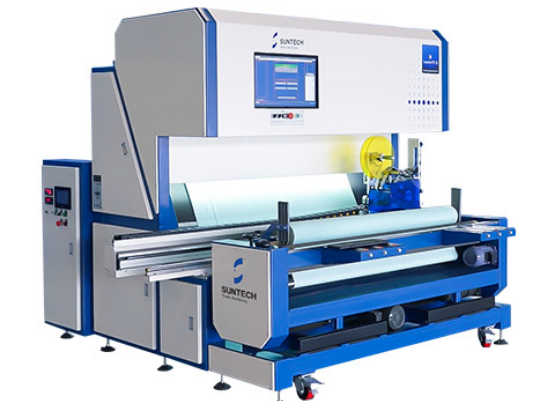
Camera systems watch the fabric roll in real time, catching holes, shade drops, and broken yarns the moment they happen. It even scores the roll automatically using exact 4-Point System rules. For legacy handwritten inspection logs, our Document Scanning Solutions securely digitize years of paper-based QA data to immediately deploy and train these predictive models.
Key Capabilities
- Real-time fabric scanning
- Hole and tear detection
- Shade variation analysis
- Broken yarn identification
- 4-Point System auto-scoring
Trend & Color Intelligence
The Problem
Designers get stuck scrolling through competitor social feeds and pulling last year’s order spreadsheets just to guess what colors will hit next season. It’s slow, tedious, and relies entirely on gut feeling.
Pull hard data on exactly what colors and patterns are winning right now. It cross-references buyer briefs with social market data so your design choices are backed by actual evidence, not just a hunch.

Key Capabilities
- Social media trend analysis
- Competitor collection monitoring
- Historical order performance
- Color palette recommendations
- Pattern trend forecasting
Design Inspiration Engine
The Problem
Every designer hits a wall. But when a major buyer needs 15 fresh mood board concepts by Tuesday morning, 'creative block' isn't an acceptable excuse.
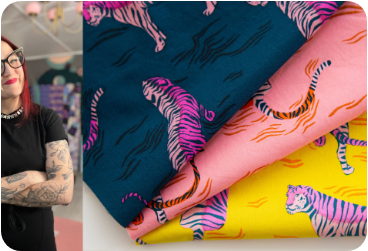
Feed it your past collections and the buyer's mood board, and it instantly spits out novel concepts, whether prints, silhouettes, or knitwear styles, that actually match your brand's core DNA.
Key Capabilities
- Mood board analysis
- Text-to-image generation
- Sketch-to-design conversion
- Brand DNA alignment
- Novel concept creation
AI-assisted Design Iterations
The Problem
You nailed the hero design. Now the buyer wants to see it in 20 different colorways and 10 pattern variations. Your team just lost three days to mindless recoloring work.
Take your single base file and instantly spin out dozens of realistic colorways, fabric texture swaps, and pattern variations. Export the whole batch in seconds to present to the buyer.

Key Capabilities
- Automated colorway generation
- Pattern variation creation
- Fabric option rendering
- Realistic presentation views
- Bulk variation export
AI Production Planning
The Problem
Planning the factory floor usually involves a massive, fragile Excel sheet. One delayed shipment or broken machine, and the entire week's schedule goes up in smoke.
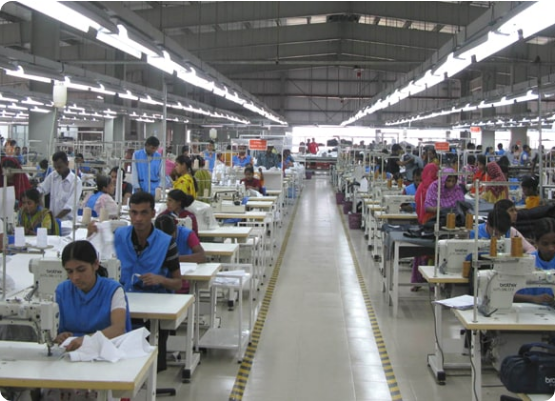
Takes the guesswork out of the floor schedule. It looks at your machine availability and order load to dynamically shuffle priorities the second a bottleneck or material shortage pops up.
Key Capabilities
- Automated schedule generation
- Machine utilization tracking
- Material shortage prediction
- Dynamic reallocation
- Order priority management
Predictive Maintenance
The Problem
There is nothing worse than a knitting machine aggressively jamming in the middle of a rush order. You eat the downtime, pay rush shipping fees, and throw off the whole floor.
Listen to the vibration and heat of the machines before they physically break. Sensors flag a failing part weeks in advance so you can swap it out quietly during a Sunday night shift.

Key Capabilities
- IoT sensor data analysis
- Vibration & temperature monitoring
- Failure prediction models
- Automated maintenance alerts
- Spare parts inventory tracking
Buyer Brief Interpreter
The Problem
A buyer drops a 40-page PDF, two Word docs, and a long email chain. Or worse, they mail physical fabric swatch books and signed lab dips that get lost in filing cabinets. Your technical team has to track every single piece of data just to pull out the actual design specs.
Drop the massive PDFs directly into the system, and log all physical swatches into our CannyRMS (Physical Records Management) module. The AI reads the entire digital mess and cross-references your indexed physical cartons to spit out a clean, structured checklist of design requirements straight into your PLM.
Key Capabilities
- Multi-format document parsing
- Requirement extraction
- Design spec checklist generation
- PLM system integration
- Ambiguity flagging
Regulatory & Compliance Hub
Our Gen AI architecture is built from the ground up to meet textile industry compliance standards.
OEKO-TEX Standard 100
Testing for harmful substances ensuring textile products are safe for human use.
AI-powered quality control with automated defect detection and compliance tracking.
GOTS (Global Organic Textile Standard)
Organic fiber content, environmental criteria, and social compliance throughout supply chain.
Supply chain traceability, automated documentation, and compliance verification.
ISO 9001 Quality Management
Consistent quality, documented processes, and continual improvement.
Automated QC documentation, defect tracking, and process optimization insights.
WRAP (Worldwide Responsible Accredited Production)
Lawful, humane, and ethical manufacturing practices.
Audit documentation automation and compliance monitoring across facilities.
Proven Textile Industry Results
Merchandising Transformation
Zero-Defect Fabric Production
Design Studio Acceleration
Why Trust CannyMinds?
6+ years combined experience in textile supply chain optimization and AI infrastructure.
Ready to Transform Your Textile Operations?
Schedule a demo with our Textile AI team to see Merchandising Automation and Design Intelligence in action.